






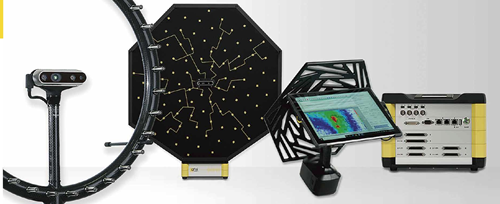
The acoustic camera is a compact, modular and highly flexible noise source localization and analysis system. It realizes vivid, precise and fast visual presentation of sound by pinpointing noise sources and marking potential quality issues, which greatly shortens product development cycles.
The acoustic camera covers an extensive range of acoustic application scenarios, just like traditional acoustic testing equipment. It can be deployed in acoustic laboratories, open test environments and harsh daily industrial production sites.
The standard configuration consists of a microphone array, a data recorder, a laptop and NoiseImage software. Customizable microphone arrays are available to meet the testing demands of various industries.
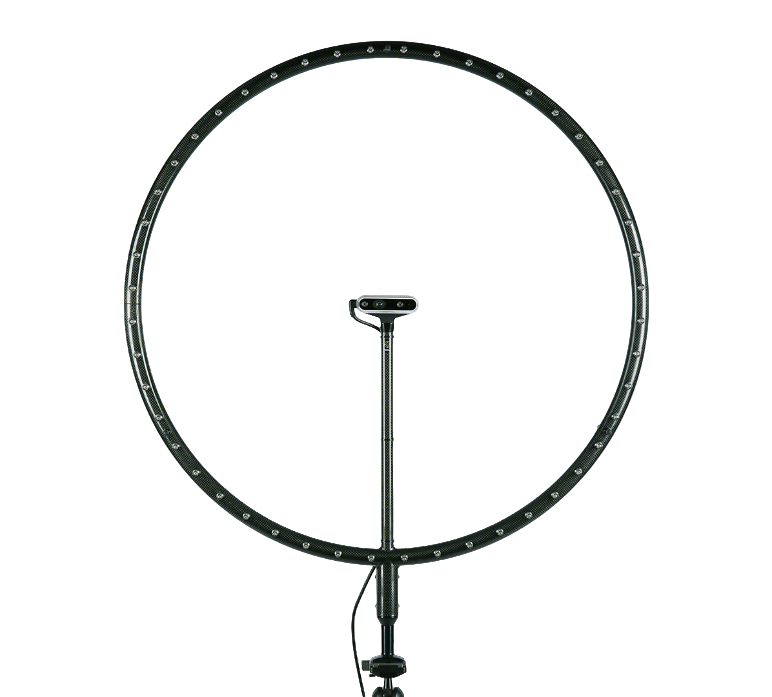
Ring32/48/72 — Circular Microphone Arrays for Acoustic Laboratories
Leveraging beamforming technology,
acoustic cameras feature microphone arrays tailored to users’ practical testing
requirements and application scenarios. Users are also allowed to customize or
assemble dedicated microphone setups for special measurement scenarios; each
array is equipped with 24 pieces of 1/4-inch electret microphones.
The Ring32/48/72 microphone arrays serve
as an ideal all-purpose solution with broad applicability. For high-frequency
noise measurement of miniature components, compact-sized microphone arrays are
more suitable.
Mounted on carbon fiber alloy tubes,
Ring32, Ring48 and Ring72 arrays boast diameters of 0.35 m, 0.75 m and 1.2 m
respectively, with recommended minimum test distances of over 0.3 m, 0.5 m and
0.5 m correspondingly. Their sound imaging frequency range spans from 100 Hz to
20 kHz.
Every array integrates a central camera. All microphones adopt 1/4-inch electret condenser sensors featuring a 20 Hz–20 kHz frequency response. The 32-microphone array comes in a compact size, while the 48-microphone and 72-microphone arrays feature larger overall dimensions.
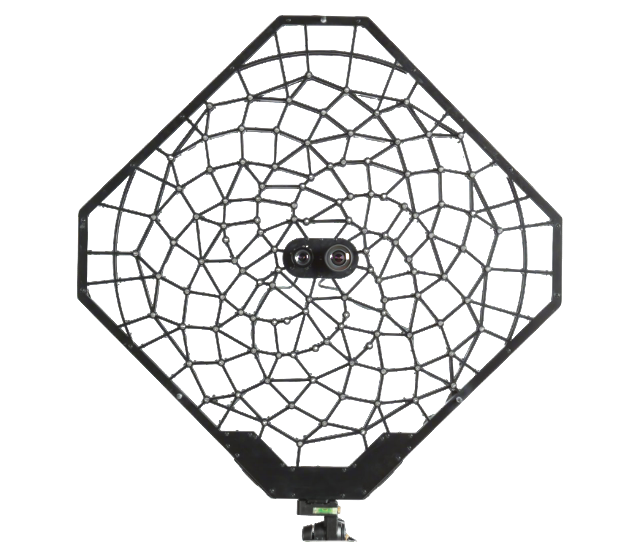
Fibonacci – Applicable to near-field and far-field measurements
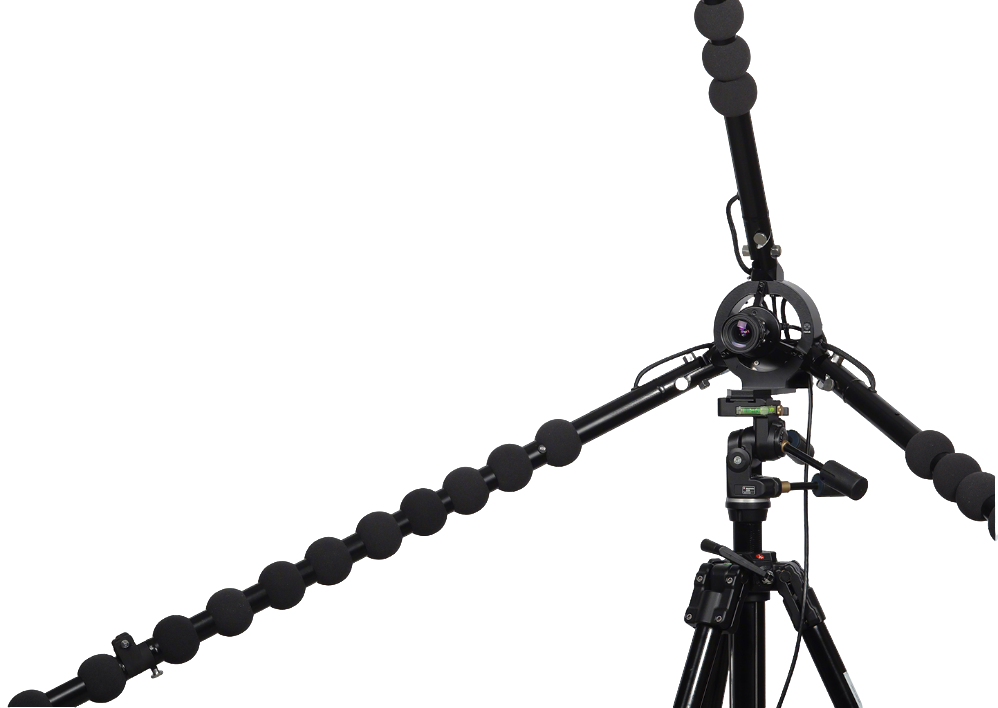
STAR48 is a star-shaped array engineered
for long-distance measurements, equipped with 48 measuring channels. Thanks to
its foldable design, the entire microphone array can be easily transported in a
standard van.
The system consists of a USB-connected
camera and 48 pieces of 1/4-inch electret microphones. Featuring a non-planar
microphone layout with a patented structure, STAR48 delivers high side-lobe
attenuation, making it ideal for sound source identification and analysis in
acoustically disturbed environments, especially pass-by noise testing.
A standard 3-meter tripod is supplied
along with a 3-degree-of-freedom adapter to mount the array at any arbitrary
angle. Its recommended measurement distance ranges from 3 m to 300 m, with an
analyzable frequency band of 100 Hz to 7 kHz (>6 dB), and the lowest
frequency for valid low-frequency analysis is 100 Hz.
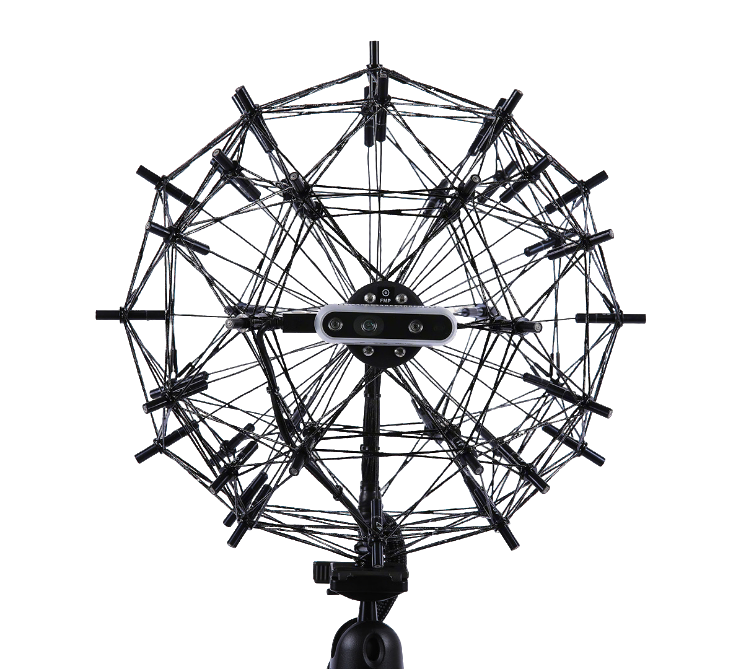
This spherical array is a 48/120-channel
measurement system engineered for sound source localization on compact
equipment and confined spaces such as vehicle cabins.
Constructed from carbon fiber, the
microphones ensure full acoustic transparency of the system, while the
optimized microphone layout significantly suppresses side lobe effects. The
spherical array integrates a USB camera and measurement microphones equipped
with Mic-Bus interfaces consistent with other series arrays.
Small-sized transducers are adopted to
minimize distortion caused by sound field fluctuations, and the spherical
structure effectively mitigates acoustic reflection interference. The array can
be rapidly mounted on the standard tripod and locked at any desired angle.
Thanks to its hollow spherical layout and
sufficient side-lobe attenuation, it supports omnidirectional sound source
localization and frequency analysis, making it perfectly suited for in-vehicle
testing.
The two models have diameters of 0.35 m and 0.6 m respectively, with a recommended minimum measurement distance of 0.3 m.
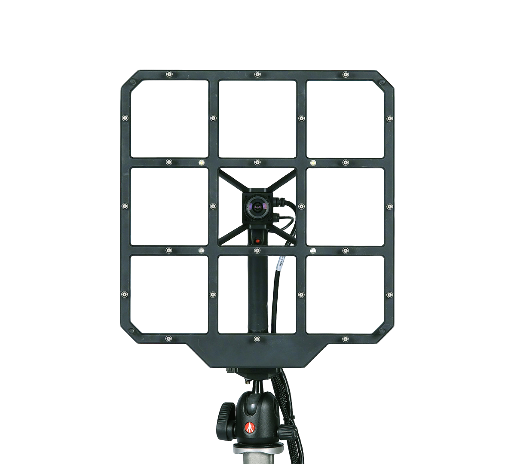
2X24 AC Paddle
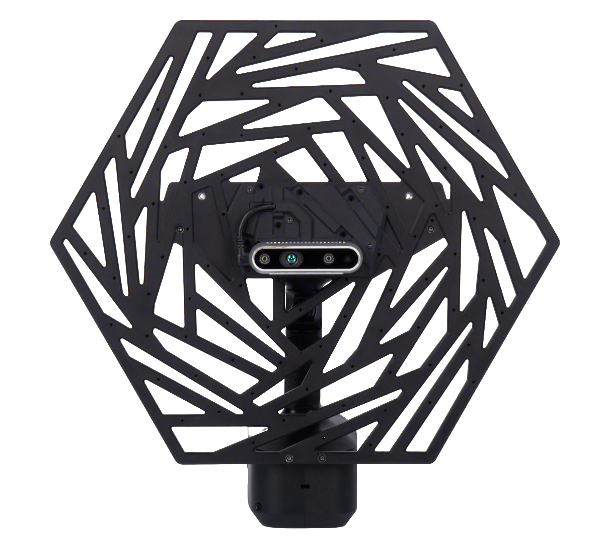
The Mikado handheld acoustic camera is an
all-in-one system composed of a microphone array, data acquisition front-end
and a tablet pre-installed with NoiseImage Mobile software, supporting direct
on-site data recording and analysis. Equipped with a touchscreen and manual
trigger button, it enables quick and straightforward operation. In addition,
Mikado can be easily connected to other computers for in-depth post-analysis.
Lightweight at only 1.7 kg, the device
delivers flexible and convenient measurement. It can be powered by rechargeable
batteries or mains power, and operated either handheld or mounted on a tripod.
The array integrates 96 microphone channels, with a recommended imaging
frequency range of 800 Hz to 24 kHz and a dynamic range of 16 dB to 50 dB.
An integrated Intel® RealSense™ depth camera is built into the unit, featuring full HD 1920 × 1080 resolution and the capability to record depth information synchronously.


 Please leave your contact information, and we will get back to you as soon as possible!